Soundness of Castings by X-Ray
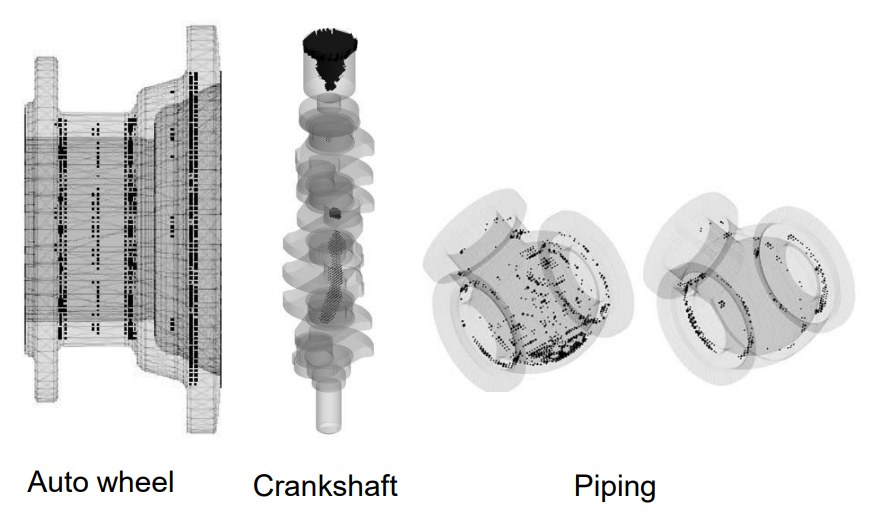
Casting CAN leave air gaps if not done properly. A non-destructive method of checking the internal structure of a metal product is to use x-rays The image above shows the result of such x-ray scan. It allows manufacturers to inspect internal macro-pores and air bubbles, which could affect the mechanical properties of the object.
Detecting Material Microstructures
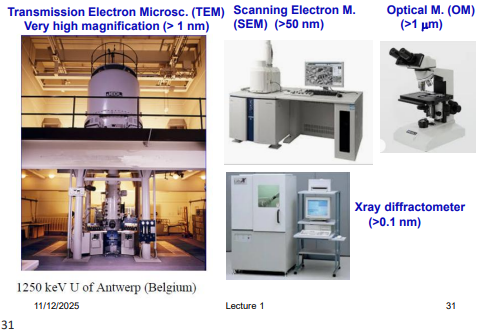
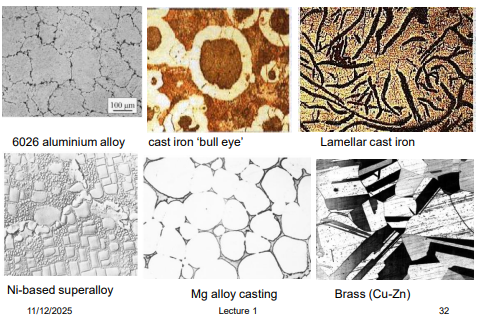
Etching
There are two types of etching:
- Chemical etching
- Thermal etching Both methods are used to inspect grain boundaries, making them more evident under a microscope’s light.
Chemical etching works by attacking the weakest parts of a material: grain boundaries. By attacking GBs first, they become more evident since they get deeper and wider.
Thermal etching works by causing thermal expansion, however, to achieve a lower energy state, grain boundaries get dug deeper into the surface, leading to a similar result as with chemical etching. This method has an issue: it is destructive. By heating it (often close to melting point), the internal structure can change, and the mechanical properties of the material tend to worsen.
Inspection by Polarized Light
Some metals (such as cadmium) will reflect polarized light differently depending on the angle of polarization and the orientation of the crystals.
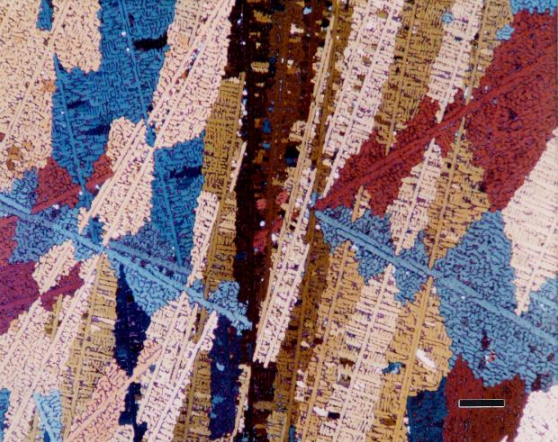
In the image above, we can see the dentrites (tree-like structures) which form different colours. This tells us that the metal is shaped via casting (dentrites form when metals are cooled after casting).