What is it?
- Pros:
- Low melting point (easy to cast)
- High fluidity (fills complex moulds)
- Low shrinkage
- Easy to machine.
- Cons:
- Generally brittle
- Has low impact resistance compared to steel.
| Type | Carbon Form | Silicon Content | Key Property |
|---|---|---|---|
| White | Iron Carbide () | Low (0.5-1.5%) | Hard, Wear Resistant, Brittle |
| Gray | Flakes | High (1-3%) | Vibration Damping, Brittle in Tension |
| Ductile | Spheres (Nodules) | Med-High (1.8-2.8%) + Mg | Tough, Ductile, Strong |
| Malleable | Clusters (Rosettes) | Med (1.1-1.6%) | Good Toughness (Heat Treated) |
White Cast Iron
This is the “primitive” form. It forms when cooling is rapid or Silicon is low.
- Composition: Low C (2.5-3%) and Low Si (0.5-1.5%).
- Structure: Carbon does not create graphite. Instead, it forms Cementite.
- Appearance: Fracture surface looks white/shiny (crystalline).
- Properties:
- Extremely hard and wear-resistant (due to carbides).
- Extremely brittle. You cannot machine this; you must grind it.
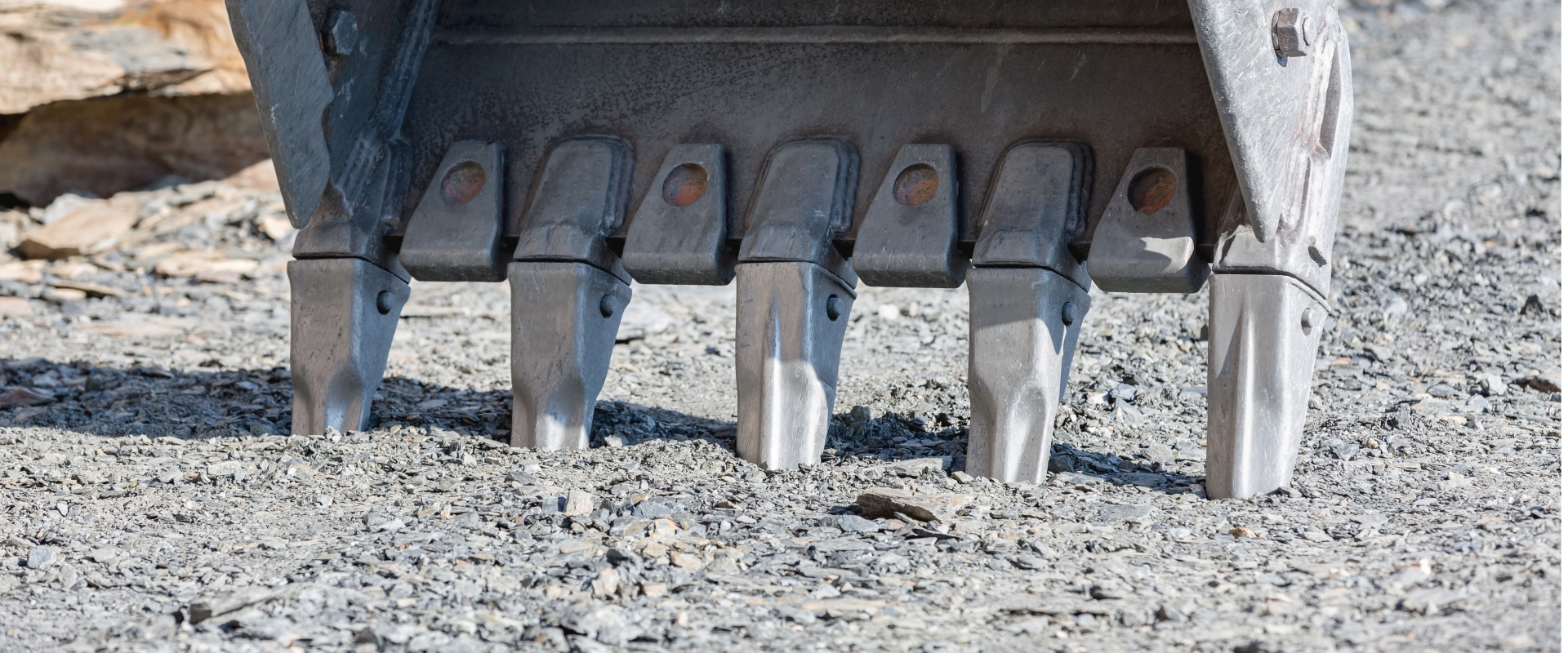
- Use: Rock crushers, slurry pumps, grinding balls.
Gray Cast Iron
This is the most common type. It forms when cooling is slow and Silicon is high (Si is a graphite stabilizer).
- Composition: C (2.5-4%) and High Si (1-3%).
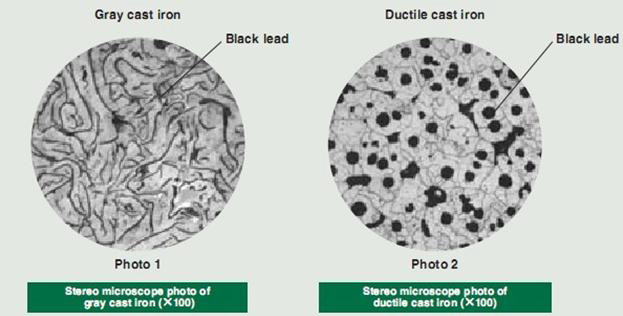
- Structure: Carbon precipitates as Graphite Flakes.
- Appearance: Fracture surface looks gray (due to the graphite).
- Properties:
- Weak in Tension: The sharp tips of the flakes act as stress concentrators (pre-existing cracks).
- Strong in Compression.
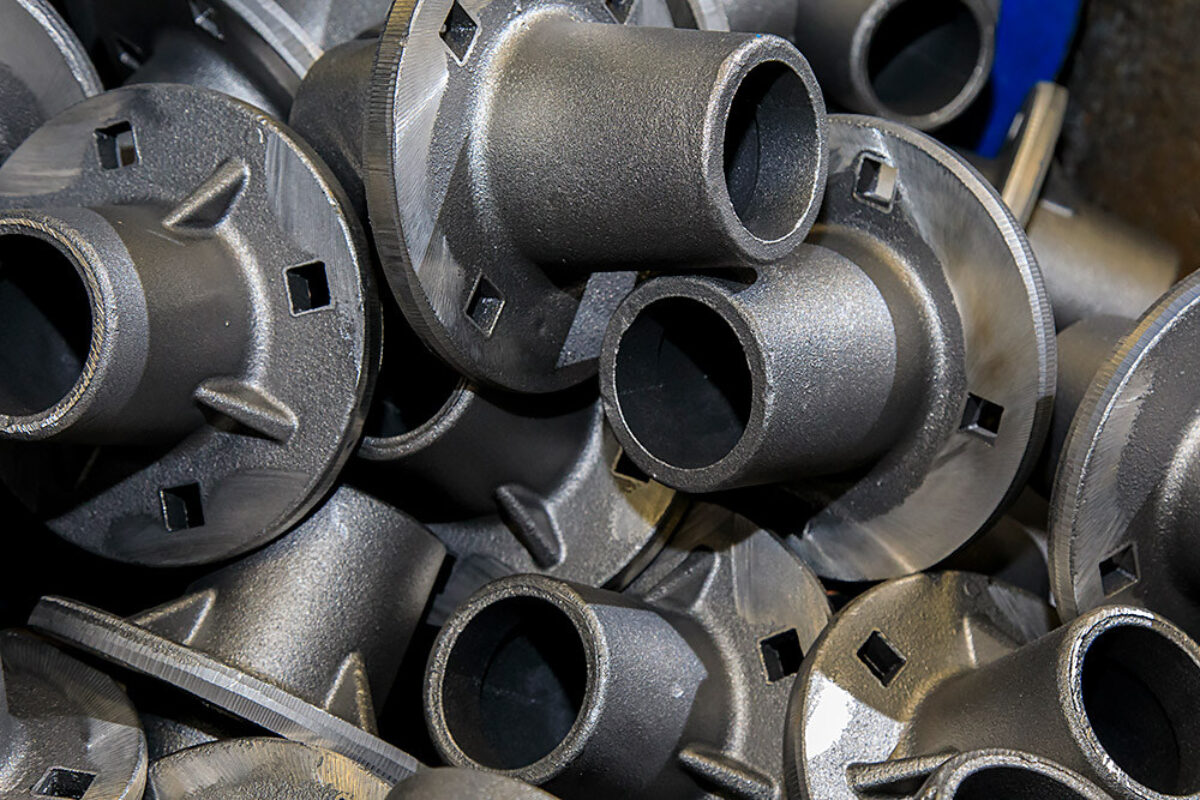
- Vibration Damping: The internal graphite flakes absorb energy. This is why heavy lathe beds and engine blocks are made of Gray Iron.
- Excellent machinability (graphite acts as a lubricant).
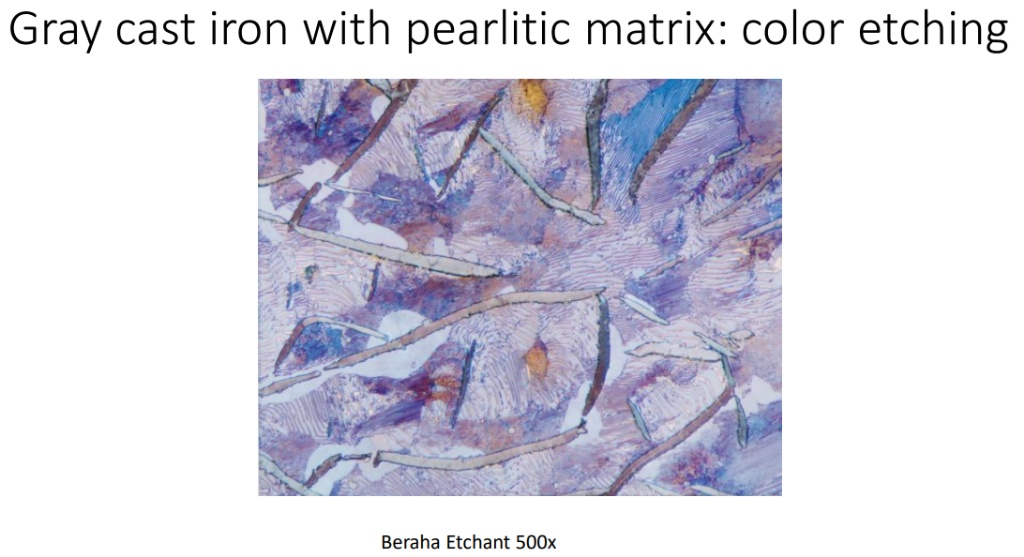
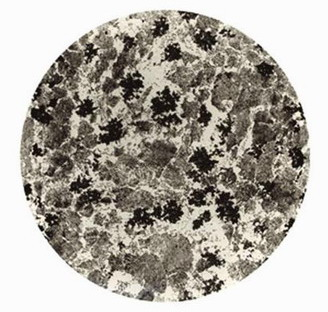
Above is the result of chemical etching on a sample of cast iron.
Ductile (Nodular) Cast Iron
The “We want the graphite, but we hate the flakes” cast iron.
- The Trick: We add a “nodulizing agent” (usually or ) to the molten mix.
- Structure: The graphite forms into Perfect Spheres (Nodules) rather than flakes. This is often called a Bull’s eye microstructure (Graphite sphere surrounded by ferrite/pearlite).
- Composition: C (3-4%) and Si (1.8-2.8%).
- Properties:
- The spheres do not concentrate stress.
- Result: High strength, High Toughness, and Ductility.
- It behaves much more like steel but retains the castability of iron.
- Use: Crankshafts, gears, heavy-duty suspension parts.
Malleable Cast Iron
- Process:
- Cast the part as White Iron (hard, brittle).
- Heat treat it (Annealing/Malleablizing) for a long time.
- The Iron Carbide decomposes into Irregular Graphite Clusters (Rosettes).
- Composition: C (2-2.6%) and Si (1.1-1.6%).
- Properties: Good toughness and ductility (hence “Malleable”).
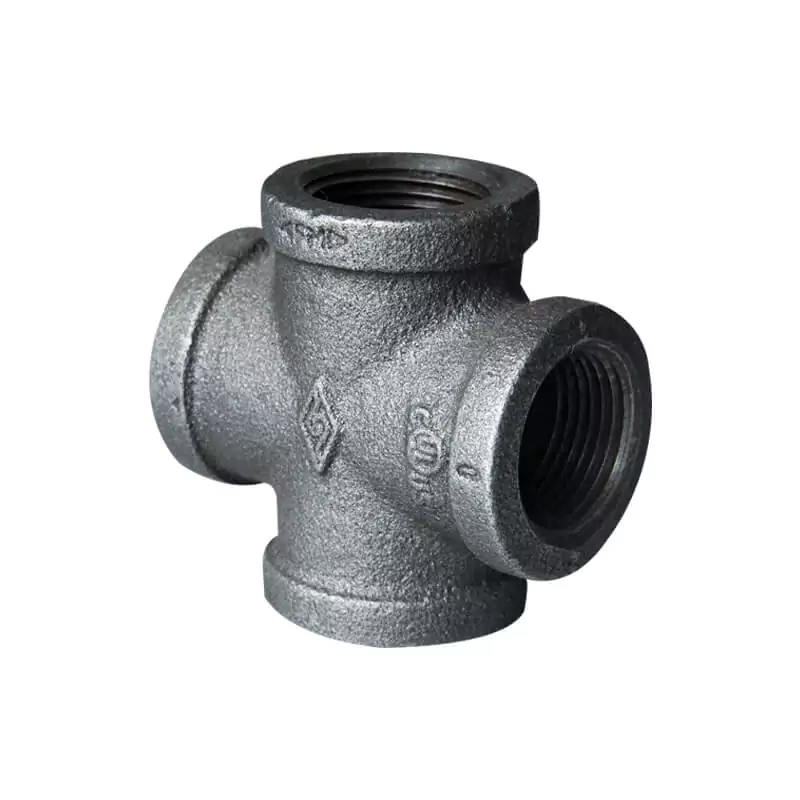
- Use: Pipe fittings, tools, railway parts.