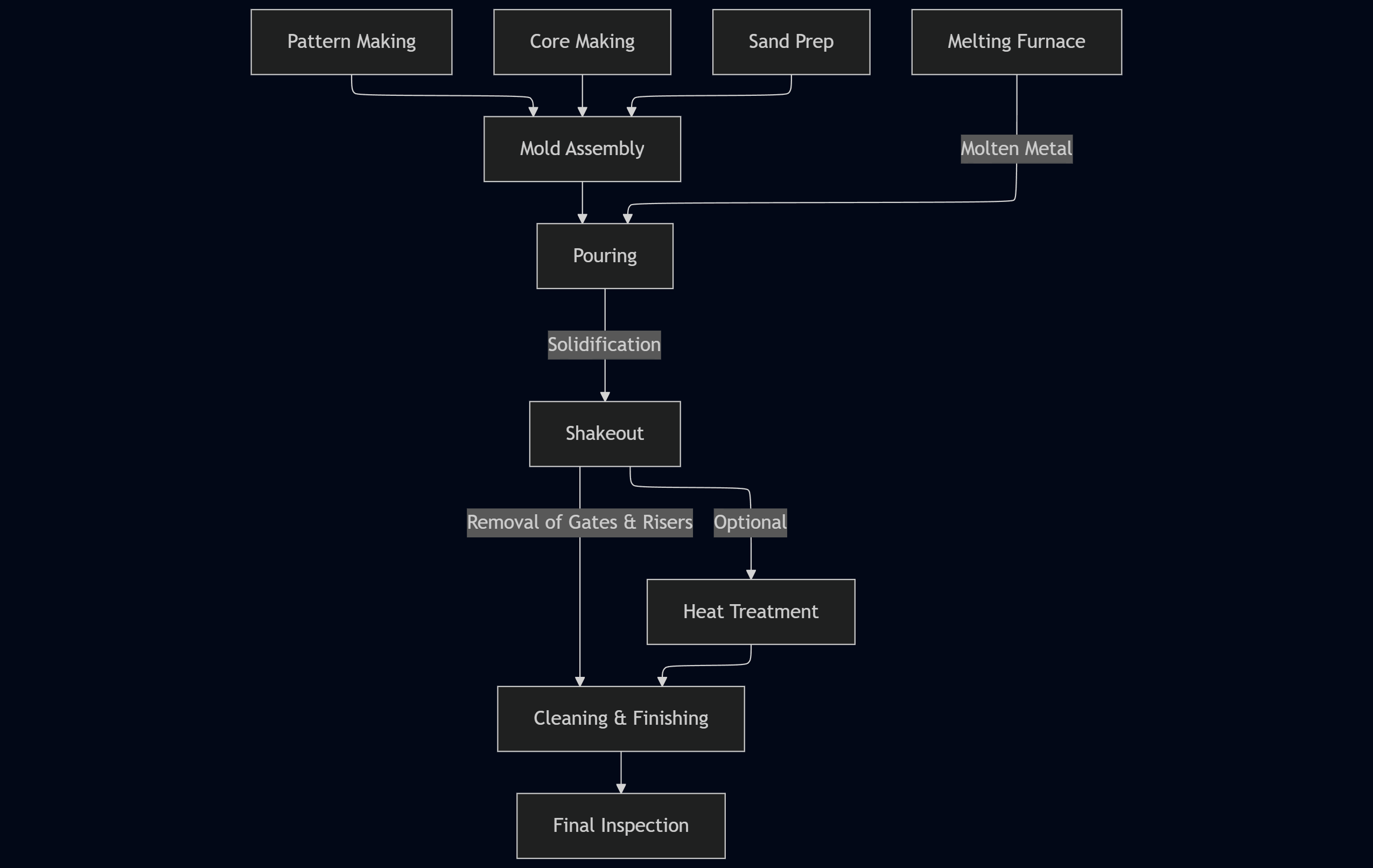
Sand Casting
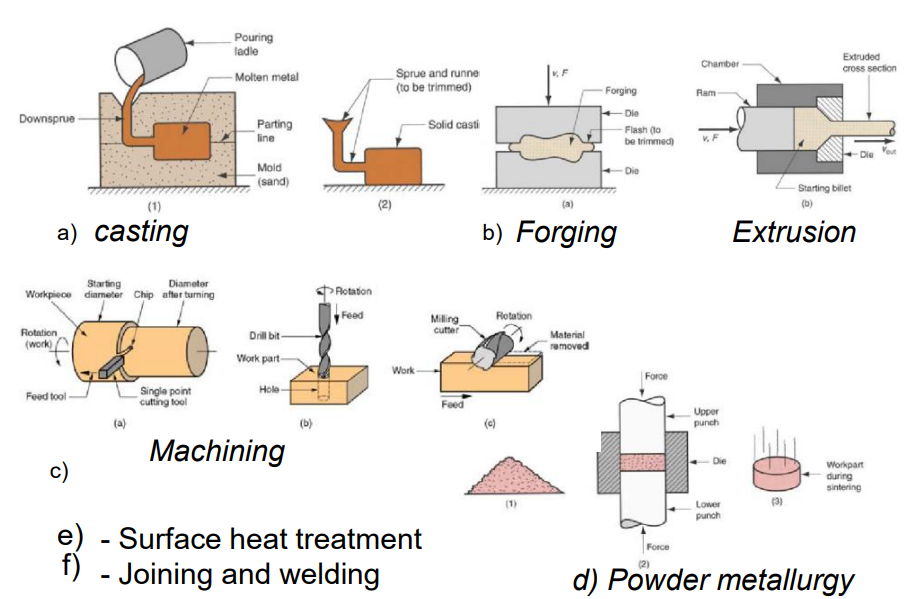
Relevant Shaping Methods
Embodied Energy
Definition
Embodied Energy is the energy required to get the required material in to produce the material in a raw shape.
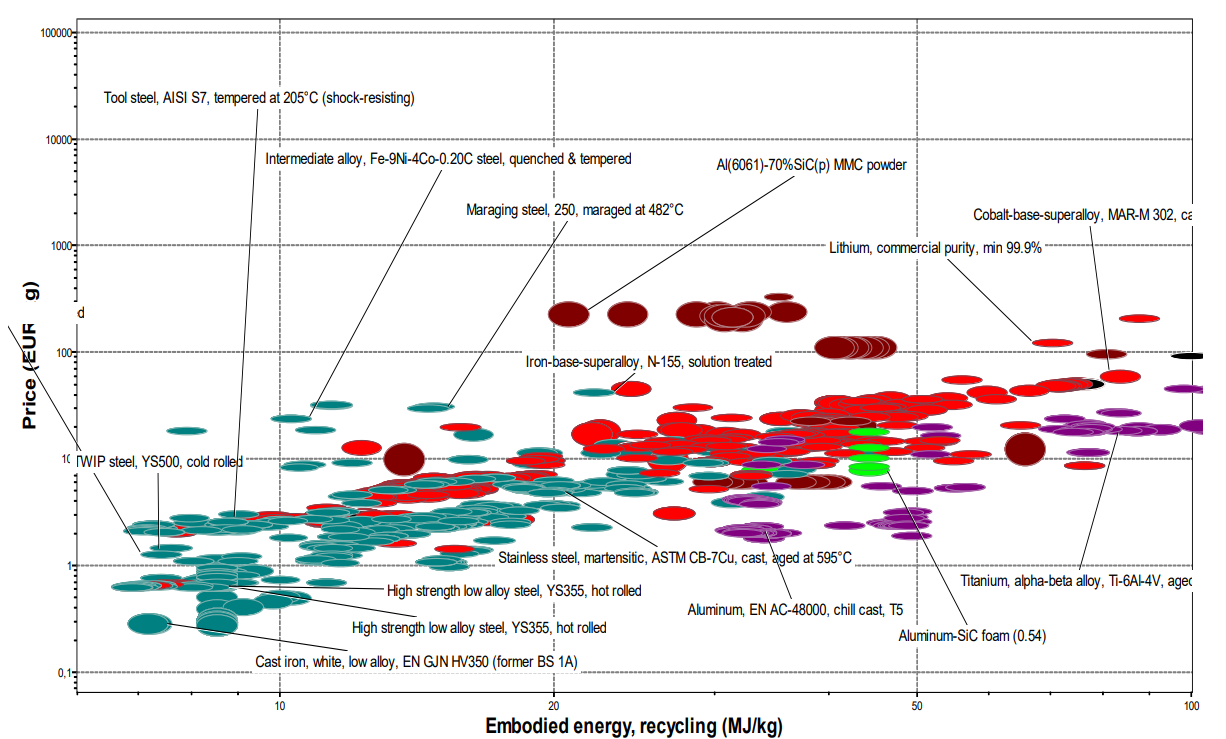
The above graph shows the cost of acquiring different materials, both in and in embodied energy.
Microstructure Control
We recall the Hall-Petch relationship that describes yield strength’s relationship with grain size:
We can therefore say that a decreased grain size will increase yield strength . We should therefore produce the material with grains as small as possible if we need to maximize .
Smaller grains create a stronger AND tougher material.
Severe Multi-Directional plastic Deformation
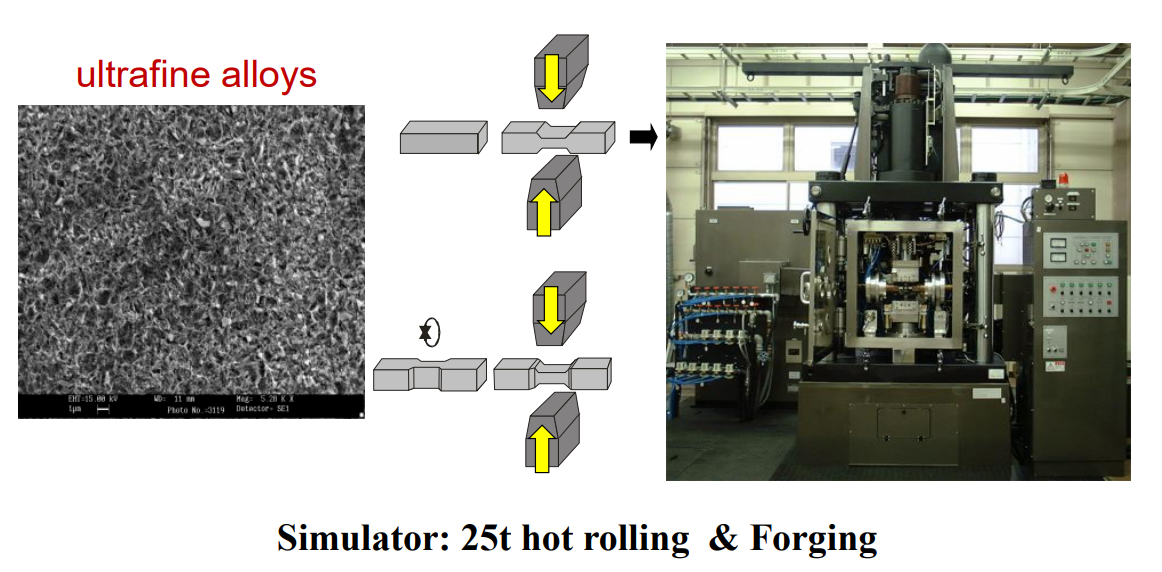
The process of severe multi-directional plastic deformation involves inducing plastic deformation over and over onto a material sample, crushing the existing grains into smaller and smaller sizes. The equipment in the photo is usually found in a lab to produce samples for testing. However, the method is also used for production.
Metals by Electrodeposition
To ensure that a material has extremely small grains from the start, electrodeposition can be used.
This process involves adding a seed to a solution of the metal ion and using electricity to cause deposition of the ion on the seed (and after the reaction started on the sample) which is then neutralized by the current.
Electrodeposition leads to metals with extremely fine grains, which can have super-plastic behaviour. For example, typically snaps at , but with this process (the form is called ), it can reach up to .
Strengthening by Texture
In order to give strength to a material in a certain direction, texturing can be used. There are several methods to achieve this:
- Rolling: by rolling the metal in a certain direction, grains, and their crystals align with the rolling direction
- Forging: by forging a shape, you allow the texture to follow the shape of the object following how the metal is poured (bottom-up)
- Pressing: By pressing a rod on its sides, it is forced to elongate, aligning the crystals in the direction of the rod.
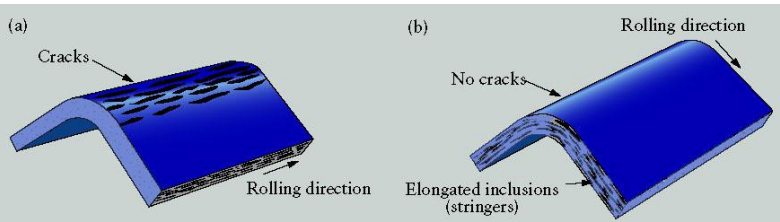
Production of High Strength 7XXX Series Aluminium ()
7XXX Series is a very strong material often used in structural components in aircrafts (Such as wings on b777)
The process is as follows:
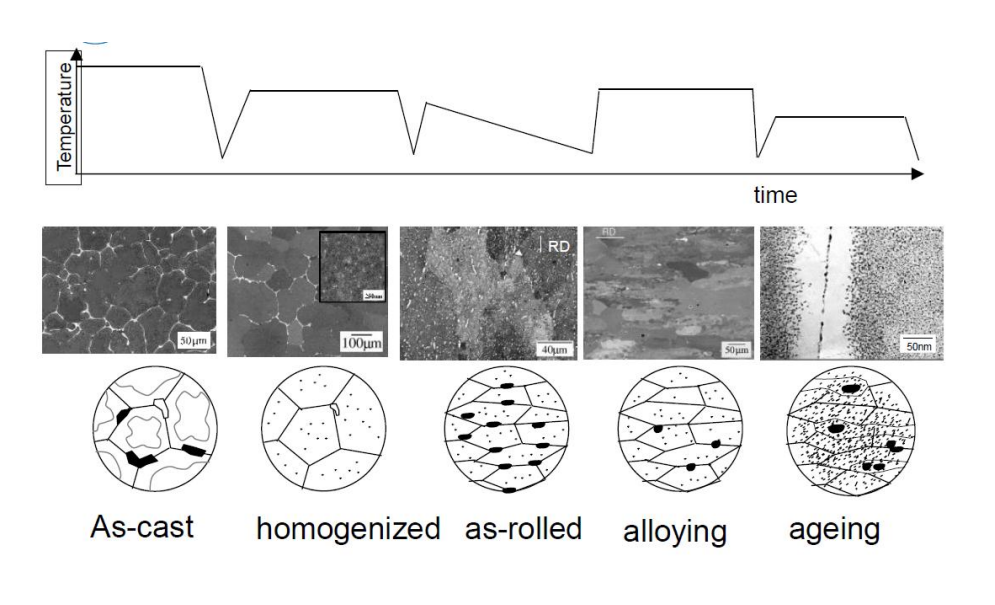
- We cast, forming a disorganized structure with second phases on grain boundaries
- We heat it up, allowing second phases to dissolve into the grains, homogenizing the material
- We roll it to strengthen it in the desired direction (direction of rolling), therefore providing it with a texture.
- We heat up the material again to remove second phases on grain boundaries
- We quench and age the material to create controlled second phases that strengthen the material.